- Gohan
- October 18, 2025
- Comments (0)
UAE Seals Final Spot for 2026 T20 World Cup with Dominant Win Over Japan

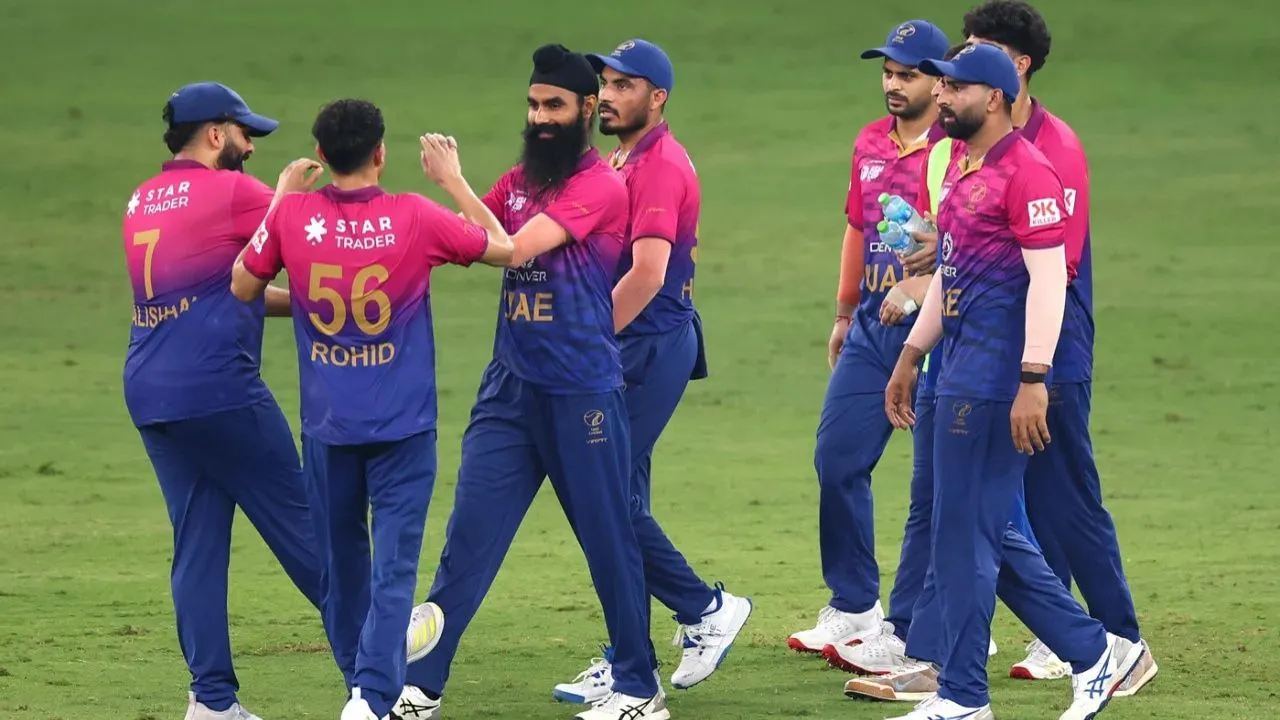
The United Arab Emirates (UAE) cricket team has officially sealed its place in the 2026 ICC Men’s T20 World Cup after a commanding eight-wicket victory over Japan. With this win, UAE became the 20th and final team to qualify for the global tournament, which will be co-hosted by India and Sri Lanka.
This triumph marks a historic moment for UAE cricket, solidifying their position as one of the top associate cricketing nations and rewarding years of consistent performance and development in the shorter format of the game.
The Decider: UAE vs Japan Match Summary
Venue and Context
The crucial qualifier took place in Oman during the Asia/East Asia–Pacific (EAP) regional final. Heading into this decisive Super Six clash, UAE knew that victory would secure the final berth for the 2026 T20 World Cup. Japan, who had shown flashes of potential throughout the tournament, were aiming for an upset to keep their dream alive.
Both teams entered the match with high intensity, but the UAE’s experience, skill, and composure made the difference when it mattered most.
UAE lock in their place at next year's #T20WorldCup in India & Sri Lanka 🔒🇦🇪
— ICC (@ICC) October 16, 2025
To know more 📲 https://t.co/RJPYa5d6ZZ pic.twitter.com/crHGViYy3O
Japan’s Innings: Early Collapse and Late Resistance
Batting first, Japan faced immediate trouble against the UAE’s disciplined bowling attack. Their top order struggled to get going, collapsing to 25/3 within the Powerplay. UAE bowlers Haider Ali and Muhammad Arfan applied relentless pressure, exploiting movement off the pitch and restricting Japan’s scoring opportunities.
Wicketkeeper-batter Wataru Miyauchi was the standout performer for Japan, scoring a resilient 45 off 32 deliveries*, showing good technique and temperament. However, with little support from the rest of the lineup, Japan could only manage 116/9 in their 20 overs.
A late partnership between Miyauchi and the lower order added some stability, but it was never enough against UAE’s superior attack. Their inability to rotate strike and accelerate during the middle overs proved costly.
🇯🇵 Japan end their Asia-EAP Qualifiers run with 2 wins & 4 losses.
— Associate Chronicles (@AssociateChrons) October 17, 2025
Not the finish they would’ve wanted, but if you’d offered them this record before the tournament, they’d have taken it in a heartbeat.
🎯 Top wicket-taker: Declan Suzuki (9)
🏏 Top run-scorer: Esam Rahman (200) pic.twitter.com/oBrRWXy4U9
UAE’s Clinical Chase: A Captain’s Knock
If there was one area that separated the sides, it was fielding. Bangladesh’s otherwise disciplined effort unraveled with a handful of crucial mistakes in the final stages.
The biggest moment came when Shorna Akter, the batting hero, dropped Nadine de Klerk in the penultimate over — a regulation catch that would have likely sealed victory. Instead, de Klerk capitalized on the error, striking boundaries that turned the match in South Africa’s favor.
There were earlier lapses too. Chloe Tryon was given a life on 46, and several misfields added unwanted runs. The outfield was damp, making handling trickier, but at this level, such excuses don’t hold. Bangladesh’s inability to execute under pressure cost them the match, plain and simple.
It’s a reminder that at World Cup level, fielding isn’t supplementary — it’s decisive. Those missed chances turned what could have been a historic win into another painful defeat.
Historic Qualification for UAE
This victory marks a monumental achievement for UAE cricket. It’s their third appearance in the ICC Men’s T20 World Cup, following previous qualifications in 2014 and 2022.
What sets this qualification apart is the level of dominance the UAE displayed throughout the qualifiers. They showed consistency in all departments—batting depth, disciplined bowling, and sharp fielding. This success also highlights the progress made under the Emirates Cricket Board’s structured development programs and investment in local talent.
BREAKING: UAE EARN QUALIFICATION FOR ICC MEN'S T20 WORLD CUP 2026!
— UAE Cricket Official (@EmiratesCricket) October 16, 2025
🇦🇪🫡
Congratulations to the men's team on their outstanding victory over Japan in Muscat today - the win has SEALED UAE's spot in next year's ICC Men's T20 World Cup 2026.
Haider Ali, Muhammad Arfan, Alishan… pic.twitter.com/FlMsFCQeDg
Key Performers for UAE
- Muhammad Waseem (Captain): Led by example with a confident knock at the top, ensuring a composed chase.
- Alishan Sharafu: His aggressive batting in the Powerplay dismantled Japan’s hopes early.
- Haider Ali: The standout bowler with a match-winning spell that derailed Japan’s innings.
- Muhammad Arfan: Consistent and reliable, he maintained control and picked up key wickets.
- Fielding Unit: Quick reflexes and direct hits demonstrated the team’s energy and unity.
Together, these performances underline why UAE deserved to be part of the global showpiece event.
The Final 20 Teams for the 2026 T20 World Cup
With UAE’s qualification, the final lineup for the 2026 ICC Men’s T20 World Cup is now complete. The teams are:
- Hosts: India, Sri Lanka
- Automatic Qualifiers: Afghanistan, Australia, Bangladesh, England, South Africa, USA, West Indies
- Ranking Qualifiers: Ireland, New Zealand, Pakistan
- Regional Qualifiers: Canada (Americas), Italy and Netherlands (Europe), Namibia and Zimbabwe (Africa), Nepal, Oman, and UAE (Asia/EAP)
This 20-team format promises to be one of the most competitive T20 World Cups in history, showcasing the expanding global reach of cricket.
🚨 TEAMS QUALIFIED FOR T20 World Cup 2026 🏆
— ICC Asia Cricket (@ICCAsiaCricket) October 16, 2025
Nepal*, Oman*, UAE*, India, Sri Lanka, Australia, Afghanistan, Bangladesh, England, South Africa, Ireland, New Zealand, West Indies, Zimbabwe, Pakistan, United States, Canada, Italy, Netherlands, Namibia.
20 teams qualified!🔒 pic.twitter.com/oNIV2h6PHw
Tournament Format and Expectations
The 2026 edition will feature four groups of five teams each, with the top two from each group advancing to the Super 8 stage, followed by semifinals and the grand final.
For UAE, this format presents a golden opportunity to make an impact on the world stage. With momentum on their side and a confident unit, they could challenge established teams and push for a place in the Super 8.
The tournament, to be held across venues in India and Sri Lanka, will test teams with a variety of conditions—spin-friendly surfaces, humid climates, and diverse crowd support. UAE’s familiarity with subcontinental conditions could prove advantageous.
Significance of This Qualification for UAE Cricket
1. Symbol of Progress
The qualification underscores the rapid development of UAE cricket infrastructure. From nurturing homegrown talent to providing international exposure through domestic leagues, the Emirates Cricket Board’s long-term vision is paying dividends.
2. Boost to the Cricket Ecosystem
With qualification secured, UAE cricket will attract greater sponsorships, fan engagement, and government backing. This opens doors for more investment in academies, training facilities, and youth programs.
3. Inspiration for Emerging Nations
UAE’s success is also a beacon of hope for other associate nations. It proves that with the right structure, consistency, and commitment, emerging teams can reach the biggest stage in world cricket.
Challenges Ahead for UAE
While the qualification is a massive milestone, the real challenge begins now. Competing against top-ranked nations will require a higher level of tactical preparation, fitness, and mental resilience.
Areas to Focus On:
- Middle-Order Stability: Building partnerships under pressure will be vital against stronger bowling units.
- Spin Depth: Subcontinental conditions demand quality spin options, an area UAE must strengthen.
- Death Bowling: Sharpening execution in the final overs will be key in tight contests.
Game Simulation: Regular exposure through high-intensity matches against full-member nations will boost confidence.
Japan’s Campaign: A Step Forward Despite Defeat
Though Japan fell short of qualification, their performance in the regional finals showed promising signs. Their participation in the Super Six stage itself was an achievement for a nation still growing its cricketing base.
Players like Wataru Miyauchi demonstrated the potential within the Japanese system. With continued investment, exposure, and grassroots initiatives, Japan could become a stronger force in future qualifiers.
The 20 teams that will feature at next year's Men's #T20WorldCup have now been confirmed 🏆
— ICC (@ICC) October 17, 2025
More 👉 https://t.co/KdYn1GwAHz pic.twitter.com/97JMzgJ2SY
The Road to 2026: What’s Next for UAE
The focus now shifts to preparation. UAE will look to organize bilateral series, training camps, and exposure tours leading up to the World Cup. Ensuring match practice against full-member teams will be crucial in bridging the experience gap.
UAE’s leadership team, led by captain Muhammad Waseem and coach Aaqib Javed, is expected to emphasize adaptability, fitness, and tactical awareness. The goal will be not just participation—but competitive performance on the global stage.
The team’s unity and recent form suggest they could cause a few upsets in 2026. With strong top-order batting, disciplined bowling, and the hunger to prove themselves, UAE could be a dark horse in the tournament.
Cricket’s Growing Footprint in the UAE
Beyond qualification, this victory represents the UAE’s rising influence in global cricket. The country’s world-class infrastructure—such as the Dubai International Stadium and Sharjah Cricket Stadium—has already hosted major ICC events.
Now, with their national team earning a deserved spot among the world’s best, UAE cricket has entered a new era. The success will likely boost grassroots participation and inspire the next generation of cricketers across the Emirates.
Conclusion: A Landmark Moment for UAE Cricket
UAE’s emphatic win over Japan to seal their 2026 T20 World Cup berth is more than just a sporting result—it’s a statement. It highlights the nation’s cricketing evolution, strategic growth, and the hard work of players and coaches who have built a competitive setup capable of thriving on the global stage.
With qualification secured, the focus now turns to preparation, performance, and pride. The countdown to the 2026 ICC Men’s T20 World Cup has begun, and UAE will carry with them not just expectations—but belief.
For fans and followers, this qualification is a reminder that the future of cricket truly belongs to the global stage—where teams like the UAE are ready to shine.